A material palette is something you experience with your hands as much as your eyes. The edge of a table, the fabric of a chair, the surface beside a window. We like to begin with a small family of materials and explore how they feel together, both in a sample tray and in daily use.
Timber: start with the grain.
Timber can bring movement into an otherwise restrained room. Before settling on a finish, compare a larger sample with the size of the surface it will become. A grain that feels subtle on a small offcut may become the dominant feature across a wall of joinery.
Consider the relationship between the floor, furniture, and cabinetry. They do not need to match, but each should have a clear role. A consistent undertone or a deliberate contrast can be more convincing than several almost-matching finishes.
Stone: choose the character, then the application.
A quiet surface can give patterned stone room to be expressive. Alternatively, a subtle stone can let the proportions of a table or counter take the lead. Look at a full slab or representative selection where possible; a small sample cannot tell the whole visual story.
Ask the supplier how the specific stone and finish respond to spills, cleaning, and regular use. Bring those answers into the selection process, especially for kitchens, bathrooms, and heavily used tables. A beautiful choice should also suit the care you want to give it.
Textiles: add softness without adding noise.
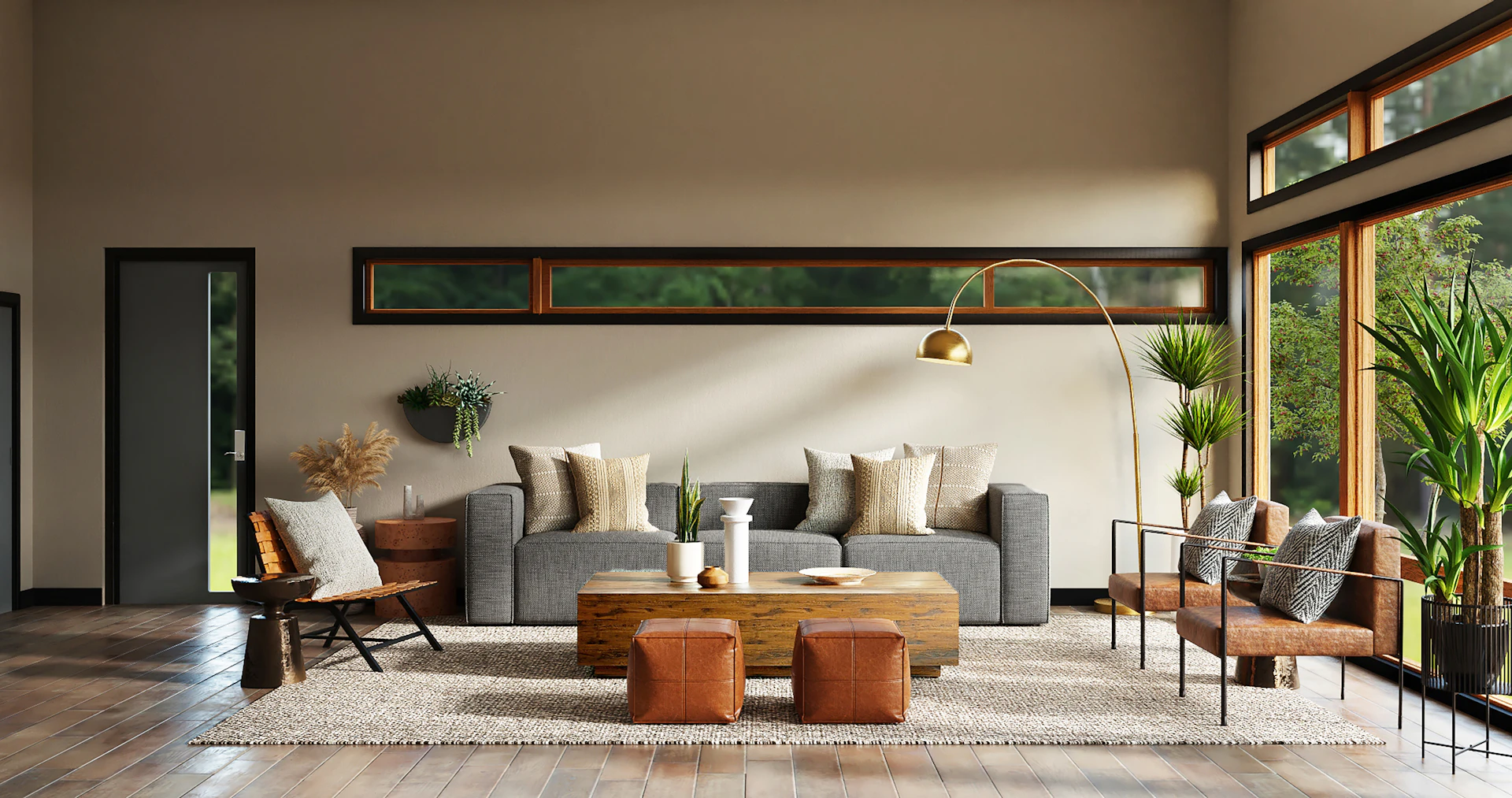
Texture can create variety within a narrow range of colours. Compare a smooth weave with a more pronounced one, or a loose-looking fabric with a tighter upholstery. Notice how each sits beside the timber and stone, rather than evaluating it alone.
Request the care instructions for the exact fabric and intended application. A decorative cushion and a family sofa have different jobs. A sample belongs in the room, under its actual light, before it becomes a large order.
Build a small, useful sample tray.
Bring the main finishes together early. Add wall colour, a metal finish, and a textile to the same tray, then look at them in the space at different times of day.
- Choose one leading material and give the others supporting roles.
- Compare samples beside existing finishes that will stay.
- Write the supplier, finish, and care notes on the back.
- Allow a little variation; consistency does not require sameness.